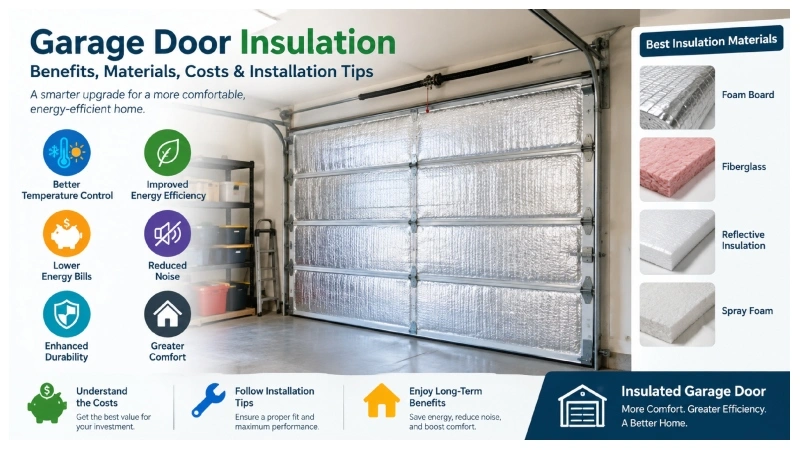
A garage can become uncomfortable surprisingly quickly. During summer, the temperature may rise enough to make tools, stored items, and nearby rooms unpleasantly warm. In winter, cold air can make the space difficult to use for anything beyond parking a vehicle. An uninsulated garage door often contributes to these temperature changes, especially when the garage receives direct sunlight or faces strong winds.Garage door insulation helps reduce heat transfer through the door, making the space more comfortable throughout the year. It can also reduce outside noise and support better energy efficiency when the garage connects to the main house.
However, choosing the right material and installing it correctly matters just as much as adding insulation itself. This guide explains the main benefits, available materials, installation process, and practical considerations to help you make an informed decision.
What Is Garage Door Insulation?
Garage door insulation is a layer of material that slows the movement of heat through a garage door. It can be added to certain existing doors or purchased as part of a new insulated door system.
Common materials include rigid foam panels, expanded polystyrene, extruded polystyrene, and polyurethane foam. Some products come in ready-made kits designed to fit the individual sections of a garage door.
The effectiveness of an insulating material is often described by its R-value. A higher R-value means the material provides better resistance to heat transfer. However, the insulation material’s rating does not always represent the performance of the complete door. The door’s joints, metal framing, gaps, and weather seals also influence its overall insulating performance.
For this reason, homeowners should compare the performance of complete door assemblies whenever possible rather than choosing a product based on one number alone.
6 Major Benefits of Garage Door Insulation
1. Better Temperature Control
One of the main advantages of an insulated door is that it can reduce temperature swings inside the garage. During hot weather, insulation slows the transfer of heat from the sun-warmed door into the space. In colder conditions, it helps slow heat loss from a warmer garage.
For example, someone who uses their garage as a home workshop may find it easier to work when the space experiences fewer temperature extremes.
Insulation will not make an unheated garage maintain a comfortable temperature by itself. However, it can help when combined with suitable ventilation, weather seals, and other improvements.
2. Improved Energy Efficiency
An attached garage shares walls, ceilings, or floors with the home. When the garage becomes very hot or cold, heat can move through these connecting areas, particularly if they have gaps or inadequate insulation.
Improving the door may help reduce this effect, especially when the garage is heated or cooled. Actual energy savings vary based on your home’s design, local climate, HVAC system, and current insulation levels.
The U.S. Department of Energy also emphasizes air sealing because unwanted air leaks can undermine energy efficiency. Sealing gaps around the garage door can therefore be just as important as improving its insulating layer.
3. Reduced Outside Noise
Insulation can help absorb or reduce some noise from traffic, wind, and nearby activities. This benefit may be useful if the garage doubles as a workshop, exercise area, or hobby room.
The amount of noise reduction depends on the door’s construction, insulation type, seals, and surrounding walls. Insulation alone will not make a garage completely soundproof, but it may contribute to a quieter environment.
4. Greater Comfort for Everyday Activities
A garage often serves several purposes beyond vehicle storage. People use these spaces for laundry, DIY projects, exercise, and household storage.
An insulated door can make these activities more comfortable by reducing the impact of outdoor temperatures. It may also help protect certain temperature-sensitive items from rapid temperature changes, although insulation does not guarantee safe storage conditions.
5. Potential Long-Term Energy Savings
If your garage shares a boundary with conditioned living space, reducing heat transfer may lower some of the heating or cooling demand inside the home.
However, savings are not guaranteed. A detached garage used only for parking may offer little financial return from a major insulation upgrade. Before investing, consider how often you use the space and whether temperature changes affect your home’s comfort.
6. Improved Door Strength and Durability
Some factory-insulated garage doors use a layered construction that combines insulation with interior and exterior door panels. Polyurethane foam, for example, can bond to the door’s metal skins and increase rigidity.
This benefit depends on the complete door design. Adding insulation to an existing door does not automatically make it stronger, and poorly fitted materials can interfere with moving parts.
Types of Garage Door Insulation Materials
Choosing the right material depends on your budget, climate, door construction, and intended use.
Expanded Polystyrene (EPS)
EPS is a lightweight foam commonly used in insulation kits. It is relatively affordable, easy to cut, and available in rigid panels.
It can suit homeowners looking for a straightforward upgrade without replacing the entire door. However, panel fit and installation quality affect performance. EPS must also be protected and installed according to the product’s fire-safety requirements.
Extruded Polystyrene (XPS)
XPS is another rigid foam insulation material. Its closed-cell structure offers useful thermal resistance and moisture resistance.
It may work well in applications where moisture exposure is a concern, provided the product is suitable for the door and local conditions. Costs and thermal performance vary by product thickness and specification.
Polyurethane Foam
Polyurethane offers strong insulating performance for its thickness. Manufacturers commonly inject it between the layers of insulated steel garage doors, where it expands and fills the available space.
This construction can provide good thermal performance and additional rigidity. It is often found in premium insulated doors, although the final cost depends on the complete door system.
Fiberglass Insulation
Fiberglass consists of fine glass fibers that trap air and slow heat transfer. It is widely used in buildings, but loose or standard building insulation is not automatically suitable for a moving garage door.
If you choose fiberglass, use a product specifically approved for the application and follow its handling instructions. Wear the recommended protective equipment, and prevent exposed fibers from entering the garage.
Reflective Insulation
Reflective products use a shiny surface to reflect radiant heat. Their effectiveness depends on the installation method and the presence of an appropriate adjacent air space.
A reflective sheet does not necessarily perform like a conventional insulating panel. Check the manufacturer’s tested specifications rather than assuming that a foil surface alone will provide substantial thermal resistance.
How to Choose the Right Insulation
Before buying a kit or replacing your door, consider these factors:
- Climate: Homes in colder regions may benefit from higher thermal resistance, while hot climates may require attention to solar heat gain and air leakage.
- Garage use: A workshop or gym may justify a more effective insulating system than a detached garage used only for storage.
- Door Type: Identify whether your garage door is sectional, single-panel, steel, or wood, as insulation kits are not compatible with every door design.
- R-value: Compare ratings using the same measurement method. A whole-door rating is more useful than a material rating alone.
- Weight: Additional insulation can affect the balance of the door and the strain on its springs and opener.
- Budget: Consider the cost of the kit, installation, weather seals, and any necessary professional adjustments.
If the existing door is damaged, poorly balanced, or near the end of its useful life, replacing it with a purpose-built insulated model may be a better investment.
How to Install Garage Door Insulation
Many compatible sectional doors can accept a retrofit kit. The exact procedure depends on the door and insulation product, so follow the manufacturer’s instructions.
Step 1: Inspect the Door
Check the panels, hinges, tracks, springs, and weather seals. Look for corrosion, cracks, loose fasteners, and other signs of damage.
Do not attempt to repair or adjust torsion springs yourself. These components remain under significant tension and can cause serious injuries.
Step 2: Measure Each Panel
Measure the individual door sections and identify any rails or supports that affect the available space. Do not assume that every panel has identical dimensions.
Accurate measurements help prevent gaps, excessive compression, and interference with the door’s movement.
Step 3: Prepare the Surface
Remove dust and loose debris from the panels. If you use a cleaning product, allow the surface to dry fully before installation.
Check whether the insulation kit requires retaining clips, approved adhesive, or another fastening method. Avoid using an adhesive that could damage the door’s finish or insulation material.
Step 4: Cut and Fit the Insulation
Cut each panel according to the kit’s instructions. Wear appropriate gloves, eye protection, and respiratory protection when the material requires them.
Fit the insulation securely without blocking hinges, rollers, tracks, or other moving components. Keep safety labels visible and ensure the insulation does not affect the door’s structure or moving parts.
Step 5: Check Weather Seals
Check the bottom seal and weatherstripping around the top and sides of the garage door for damage or gaps. Replace damaged seals with suitable products.
A properly fitted seal helps limit drafts and water intrusion. However, do not seal over drainage openings or ventilation features that the garage requires.
Step 6: Test the Door
Once installation is complete, operate the door and check that it moves freely. Watch for rubbing, loose panels, unusual noises, or difficulty opening and closing.
If the door feels heavier, moves unevenly, or causes the opener to struggle, stop using it and contact a qualified garage door technician. Do not try to compensate by adjusting the springs yourself.
Common Mistakes to Avoid
Even a good insulation product can deliver disappointing results if the installation is poorly planned.
Ignoring air leaks: Insulation slows heat transfer, but it does not automatically seal gaps.Check the seals around the garage door and the joints between the garage and your home for gaps or air leaks.
Adding too much weight: Heavy materials can affect the door’s balance and strain its operating system. Check the door manufacturer’s weight limits before proceeding.
Choosing materials without checking compatibility: A product designed for walls or roofs may not be safe or suitable for a moving door. Use an approved kit or seek professional advice.
Expecting dramatic energy savings: Results depend on the entire building, not just the door. Insulating the shared garage ceiling or walls and sealing air leaks may be equally important.
Overlooking fire and air safety: An attached garage needs a suitable separation from living areas. Never compromise required fire protection, and do not allow vehicle exhaust or fuel vapors to enter the home.
Is Garage Door Insulation Worth the Investment?
For many homeowners, the decision ultimately depends on how they use their garage. An attached garage beneath a bedroom or beside a living room may benefit more than a detached structure with no heating or cooling.
Consider a homeowner who spends several hours each week working in a garage during summer. Choosing a well-insulated door, along with proper weather sealing and ventilation, can help make the space more comfortable. Someone who rarely enters a detached garage may see less value from the same upgrade.
Compare the installation cost with your comfort needs, the condition of the existing door, and other possible improvements. In some homes, sealing gaps or improving the insulation between the garage and living areas may deliver better value than upgrading the door alone.
Frequently Asked Questions
Does insulation keep a garage cool in summer?
It can reduce the amount of outdoor heat that passes through the door, but it cannot completely eliminate heat gain. Sun exposure, ventilation, roof insulation, and air leakage also affect indoor temperatures.
What is the best material for an insulated garage door?
Polyurethane generally provides strong thermal performance for its thickness, while EPS can offer a more affordable retrofit option. The best choice depends on the door design, budget, and required performance.
Is it possible to insulate my existing garage door myself?
Yes, if the door is compatible with a suitable insulation kit and you can install it without affecting its operation. Follow the product instructions and seek professional help if the door has mechanical problems.
Will insulation reduce energy bills?
It can be beneficial when heat from the garage transfers into the adjacent conditioned living areas. The amount of any savings depends on the building, climate, and other energy-efficiency measures.
Final Thoughts
Insulating a garage door can enhance comfort, reduce heat transfer, and make the space more practical for everyday use activities. The best results come from choosing a compatible material, installing it correctly, and addressing drafts around the door.
Before starting, assess your garage’s condition, climate, and intended use. Compare complete door performance rather than relying on insulation ratings alone, and make sure the added weight will not compromise safe operation. With the right approach, you can make a practical improvement without spending more than your garage needs.For more information visit our site daily.