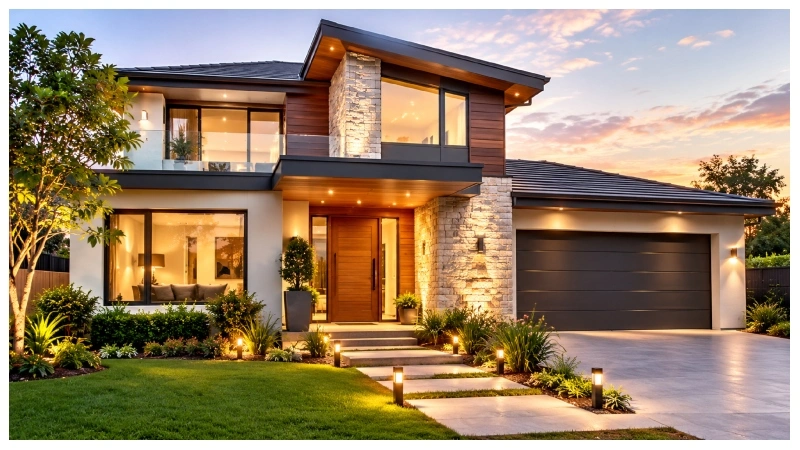
A home’s exterior is the first thing people notice, but good exterior design involves much more than choosing an attractive paint colour. The right combination of architecture, materials, lighting, landscaping, doors, windows, and outdoor spaces can make a property feel welcoming while improving its function and long-term appeal.Exterior Design DrHomey offers a useful way to think about modern home exteriors as a complete design rather than a collection of individual features. Whether you are building a new property, renovating an older house, or simply looking for ideas, understanding the basics can help you make better design decisions.
What Is Modern Exterior Design?
Modern exterior design focuses on clean forms, practical layouts, balanced proportions, and carefully selected materials. It does not necessarily mean a house must look ultra-minimalist or futuristic.
A modern exterior might combine brick, stone, timber, concrete, metal, glass, and rendered walls. What matters most is how all these elements come together to create a balanced and cohesive exterior.
For example, a simple rendered facade can gain character from a timber entrance door, dark-framed windows, warm outdoor lighting, and carefully planned planting. Instead of adding more decoration, the design creates interest through texture, contrast, and proportion.This approach is one reason modern exterior styles remain adaptable. They can work on compact urban homes, large family properties, contemporary villas, and renovated traditional houses.
Start With the Architecture
Before selecting colours or decorative features, consider the basic shape of the property.
Look at the roofline, number of floors, window positions, entrance location, balconies, garage, and relationship between the house and the surrounding land. These architectural features establish the framework for everything else.A common mistake is trying to force a particular trend onto a building that has a very different architectural character. A better approach is to identify the property’s strongest existing features and design around them.
For instance, a house with large windows may benefit from simple surrounding finishes that allow the glazing to become a visual feature. A property with a low roofline may look more balanced when horizontal materials and planting reinforce its proportions.The best Exterior Design DrHomey concepts begin with the structure rather than with decorative details.
Choose Exterior Materials Carefully
Exterior materials need to look good, but they also have to cope with weather, maintenance, and everyday use.
Popular choices include:
- Brick for durability and a timeless appearance
- Natural or manufactured stone for texture
- Timber for warmth and visual contrast
- Metal for contemporary detailing
- Render for clean, uninterrupted surfaces
- Concrete for a strong architectural appearance
- Glass for natural light and visual openness
You don’t need a wide range of materials to create an attractive exterior.
In fact, limiting the palette can often produce a more sophisticated result.
A practical rule is to choose one primary exterior material, one secondary material, and perhaps a smaller accent. For example, light render could form the main facade, timber could define the entrance, and dark metal could appear around windows and lighting.
Before committing to a material, consider your local climate. Rain, humidity, intense sunlight, freezing temperatures, coastal air, and temperature changes can all affect exterior finishes differently. Manufacturer guidance and local building requirements should always take priority.
Create a Balanced Colour Scheme
Colour has a major effect on how a house appears from the street.
Modern homes often use neutral colours such as white, cream, grey, beige, charcoal, or muted earth tones.
However, neutral colours can still create a stylish and visually appealing exterior.
Texture and subtle differences in tone can create depth without overwhelming the architecture.
Consider using colour in three levels:
-
Main colour: Used across most of the home’s exterior.
- Secondary colour: Defines architectural elements such as walls, panels, or sections of the facade.
- Accent colour: Highlights the front door, shutters, trim, or selected details.
For example, a warm off-white exterior paired with natural timber and a deep charcoal accent can create a contemporary appearance without relying on excessive decoration.
Always test exterior colours in daylight before making a final decision. A shade that looks subtle on a small indoor sample can appear much stronger across an entire facade.
Create an Eye-Catching Home Entrance
The front entrance deserves special attention because it creates the transition between the public street and private home.
A strong entrance does not need to be oversized. A well-proportioned door, simple canopy, attractive house numbers, suitable lighting, and a clear pathway can make a significant difference.
Think about the experience of arriving home. Is the path easy to follow? Is the entrance visible at night? Does the door have enough surrounding space? Do planting and lighting guide visitors naturally toward it?
A practical example is a recessed entrance framed with timber or stone. Combined with warm lighting and simple landscaping, this can create depth and make an otherwise plain facade more interesting.
Use Windows as Design Features
Windows influence both appearance and indoor comfort.
Large windows can give a modern home an open appearance and increase daylight, while carefully positioned smaller windows can provide privacy where needed. Window frames also contribute to the overall exterior style.
Dark frames can create a strong contemporary contrast against pale walls. Timber frames or timber-look finishes can introduce warmth. Simple white frames may work particularly well with traditional or transitional architecture.
However, looks should not be the only factor to consider. Glazing, shading, ventilation, orientation, privacy, and local energy requirements all matter.
External shading can also help manage solar heat in suitable climates. Overhangs, shutters, screens, pergolas, and strategically positioned landscaping can provide shade while becoming part of the architectural design.
Connect the House With the Landscape
A modern exterior can feel disconnected if the landscaping is treated as an afterthought.
Instead, think about the building and garden as one composition. Paths, planting beds, patios, retaining walls, fencing, outdoor seating, and lighting should support the architecture.
For a minimalist home, simple planting with repeated forms can reinforce the clean design. For a family property, lawn areas, shade trees, seating zones, and practical pathways may be more important than achieving a highly formal appearance.
Choose plants that suit your local conditions rather than selecting them purely because they look attractive in photographs. Native or well-adapted plants can often reduce maintenance and cope better with local weather.
Add Outdoor Lighting
Exterior lighting improves both appearance and practical usability after dark.
Rather than placing bright lights everywhere, use lighting to highlight important areas. Consider:
- Pathway lighting for safe movement
- Wall lights near entrances
- Downlights beneath covered areas
- Accent lighting for architectural features
- Garden lighting around trees or planting
- Security lighting in appropriate locations
Warm, controlled lighting can create a comfortable evening atmosphere. Avoid excessive brightness, especially around bedrooms or neighbouring properties.
Good lighting should reveal the architecture rather than become the main attraction.
Consider Privacy and Security
Modern exterior design should also respond to how people actually live.
Large windows and open gardens can look beautiful, but they may reduce privacy. Screens, boundary planting, fencing, pergolas, balconies, and carefully positioned windows can help create more private spaces.
Security should also form part of the planning process. Clear sightlines, suitable exterior lighting, secure doors and windows, and well-designed boundaries can support a safer home without making the property feel fortress-like.This is where thoughtful Exterior Design DrHomey planning becomes especially useful: visual appeal and practical requirements should work together.
Avoid Chasing Every Design Trend
Exterior trends change quickly. A facade that looks fashionable today may feel dated in a few years.
Instead of copying every popular design, focus on proportions, quality materials, functional outdoor spaces, and a restrained colour palette. These fundamentals generally have greater staying power.You can still introduce contemporary details through lighting, planters, furniture, paint accents, or landscaping. These elements are usually easier and less expensive to update than structural features.A useful question before making a design decision is: Will this still make sense if today’s trend disappears?
If the answer is yes, the feature is more likely to have lasting value.
Common Exterior Design Mistakes
Several problems appear repeatedly in exterior renovations.
Using too many materials: Multiple competing finishes can make a facade look chaotic.
Ignoring the surroundings: A design should respond to neighbouring buildings, local landscape, climate, and street character.
Choosing appearance over maintenance: A material that requires constant upkeep may become frustrating over time.
Poor lighting placement: Too many fixtures or overly bright lights can undermine an otherwise carefully designed exterior.
Forgetting practical circulation: Paths, driveways, bins, drainage, storage, and outdoor equipment need space too.
Treating landscaping as decoration: Plants should contribute to privacy, shade, screening, movement, and the overall composition.
How to Plan Your Own Modern Exterior
Start by photographing the property from different angles. Identify what you want to keep, what needs improvement, and which areas attract attention.
Next, create a simple materials and colour palette. Collect physical samples where possible and examine them outdoors at different times of day.Then consider the practical elements: drainage, maintenance, lighting, privacy, access, weather exposure, and local planning or building requirements.
Finally, develop the design as a whole rather than making decisions one at a time. A beautiful front door will not compensate for poorly coordinated walls, windows, lighting, and landscaping.The strongest Exterior Design DrHomey approach is therefore not about following a single style. It is about creating a coherent exterior where architecture, materials, landscape, lighting, and everyday function support one another.
Final Thoughts
A modern home exterior should look appealing, but it should also make sense for the people who live there and the environment around it. Start with the architecture, keep the material palette controlled, choose durable finishes, plan lighting carefully, and connect the building naturally with its landscape.
Most importantly, design for long-term use rather than short-lived trends. When visual character and practical thinking come together, even relatively simple exterior improvements can transform how a home looks and feels.With thoughtful Exterior Design DrHomey planning, the goal is not simply to create a fashionable facade. It is to create an exterior that feels balanced, functional, welcoming, and appropriate for the home for years to come.For more information visit my webesite.