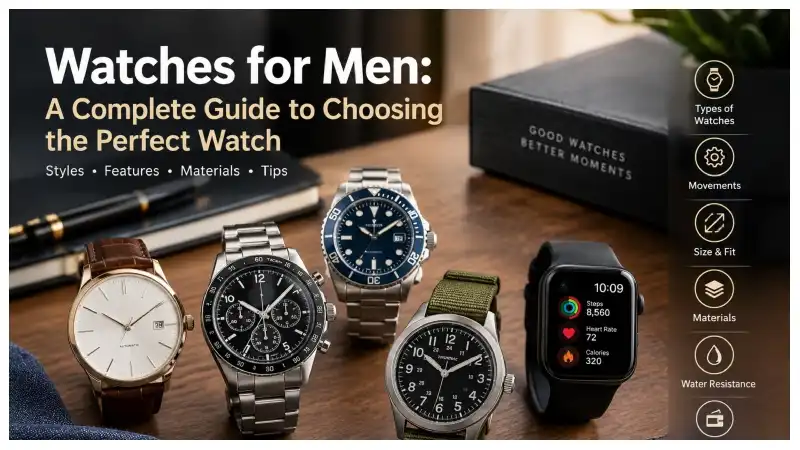
A good watch does more than tell the time. It can complete an outfit, reflect your personal style, and serve as a reliable everyday accessory. Whether you prefer a simple design, a sporty timepiece, or a classic watch for formal events, the right choice depends on your lifestyle, comfort, and budget.With so many designs, movements, materials, and features available, choosing a watch can feel confusing. Some models focus on precision and practicality, while others highlight craftsmanship or appearance. Understanding these differences will help you make a confident decision without spending money on features you do not need.Watches for Men guide explains the main types of watches, what to look for before buying, and how to choose a timepiece that suits your everyday needs.
Why Choosing the Right Watch Matters
A watch is one of the few accessories that can be both practical and personal. Unlike many fashion items, a well-maintained timepiece can remain useful for years.
For example, a professional who wears business clothes may prefer a slim watch with a clean dial. Someone who enjoys hiking or swimming might benefit more from a durable sports watch with suitable water resistance. Meanwhile, a person who wants one watch for different occasions may find a simple stainless steel model more versatile.
The key is to choose a watch that fits your routine rather than buying one simply because it looks impressive. Comfort, reliability, and suitability often matter more than a long list of features.
Different Types of Watches for Men
Before comparing individual models, it helps to understand the main watch categories. Each serves a slightly different purpose.
1. Dress Watches
Dress watches feature clean dials, slim cases, and understated designs. Many have leather straps, although metal bracelets are also common.
These Watches for Men work well with suits, formal shirts, and smart-casual outfits. Their simple appearance makes them easy to wear without drawing too much attention.
If you attend meetings, weddings, or formal dinners, a dress watch can be a practical addition to your wardrobe. Look for a case that slides comfortably beneath your shirt cuff.
2. Sports Watches
Sports watches are designed for active use. Depending on the model, they may offer stronger cases, luminous hands, rotating bezels, and improved water resistance.
They suit casual clothing and outdoor activities, although some designs also work with everyday outfits. Before buying one, consider which features you will actually use.
For instance, a rotating bezel may help you track elapsed time, while bright hands can improve visibility in low light. You do not necessarily need professional diving features for ordinary daily wear.
3. Dive Watches
Dive watches are built with underwater use in mind. Many include high water-resistance ratings, luminous markers, and a rotating bezel for measuring elapsed time.
Their robust construction also makes them popular for everyday wear. However, a diving-style design does not automatically mean a watch is suitable for scuba diving. Check its specifications and relevant standards before using it underwater.
4. Chronograph Watches
A chronograph includes a stopwatch function, usually controlled by buttons beside the crown. Some models display elapsed seconds, minutes, and hours through smaller subdials.
Watches for Men feature can help with timing exercise sessions, cooking, or other everyday tasks. Chronographs often have busier dials, so check whether you find the extra information useful and easy to read.
5. Smartwatches
Smartwatches connect with smartphones to provide notifications, fitness tracking, navigation, and other digital functions.
They are useful for people who want quick access to information or tools throughout the day. However, battery life, phone compatibility, and software support vary between models.
If you prefer a traditional watch that works without frequent charging, a conventional quartz or mechanical model may suit you better.
Understand Watch Movements Before Buying
The movement is the mechanism that powers a watch. It affects accuracy, maintenance, battery requirements, and price.
Quartz Watches
Quartz watches use a battery to power an electronic movement regulated by a quartz crystal. They are generally accurate, affordable, and easy to maintain.
Many quartz models need only occasional battery replacement and routine care. They are an excellent choice if you want a dependable watch without the responsibilities of mechanical ownership.
Automatic Watches
Automatic watches use a mechanical movement that winds itself as you move your wrist. They do not need a battery, but they may stop if you leave them unworn long enough.
These Watches for Men appeal to people who appreciate traditional engineering and mechanical craftsmanship. They usually cost more than basic quartz watches and may require periodic servicing.
Manual Mechanical Watches
Manual watches require you to wind the crown by hand to keep the mainspring powered. Some enthusiasts enjoyWatches for Men daily ritual because it creates a closer connection with the watch.
Mechanical watches can also be less accurate than quartz models, depending on their movement and condition. Choose one for its craftsmanship and character rather than assuming it will provide better timekeeping.
How to Choose the Right Watch Size
A watch should feel comfortable and look balanced on your wrist. Case diameter is important, but case thickness, lug length, and strap width also affect the overall fit.
Smaller wrists often suit compact cases with short lugs. Larger wrists can accommodate bigger designs, although an oversized watch may still feel awkward under a shirt cuff.
Whenever possible, try a watch on before purchasing it. Check that the case does not extend too far beyond the edges of your wrist and that the strap allows comfortable movement.
If you shop online, compare the listed dimensions with a watch you already own. Watches for Men simple step can help you avoid a model that looks very different in person from what you expected.
Choose Materials That Match Your Lifestyle
Watch materials influence comfort, durability, appearance, and cost.
- Stainless steel: A versatile option that offers good everyday durability and works with both casual and formal clothing.
- Titanium: Usually lighter than stainless steel, making it appealing for people who prefer a comfortable watch for long periods.
- Leather: Offers a classic appearance and pairs well with formal outfits, but it can wear out faster when exposed to sweat or moisture.
- Silicone or rubber: Useful for sports and outdoor activities because these straps are generally easy to clean.
- Ceramic: Often resists scratches well and offers a distinctive finish, although ceramic can crack or chip under certain impacts.
The best material depends on how you plan to wear the watch. A leather strap may be ideal for office use, while rubber or a suitable metal bracelet may be more practical in hot or humid conditions.
Check Water Resistance and Durability
Water resistance is an important specification, but the numbers can be misunderstood. A rating of 30 metres does not mean you should take the watch to a depth of 30 metres.
Water-resistance ratings come from controlled testing. Actual suitability depends on the watch’s construction, condition, and intended use.
For everyday splashes, look for a model rated for that purpose. For swimming, choose a watch whose manufacturer explicitly approves it for swimming. For scuba diving, use a properly specified dive watch and follow its instructions.
Also consider the crystal covering the dial. Mineral glass is common and generally affordable, while sapphire crystal offers greater scratch resistance. Neither choice makes a watch indestructible.
How Much Should You Spend on a Watch?
You do not need an expensive watch to get reliable performance. A sensible budget should reflect your needs, expected use, and willingness to pay for design or craftsmanship.
An entry-level quartz watch can be a good starting point for everyday use. Mid-range models may offer better finishing, materials, or more advanced movements. Luxury watches can provide distinctive designs and fine craftsmanship, but their prices do not guarantee that they will be the most practical choice for you.
Remember to consider the total cost of ownership. Battery replacements, servicing, strap changes, and repairs can add to the purchase price over time.
Before buying, compare the specifications, warranty, return policy, and reputation of the seller. If you are considering a pre-owned luxury watch, check its authenticity and service history carefully.
Match Your Watch to Your Personal Style
The most versatile watch is one that complements the clothes you already wear.
For office outfits, consider a clean dial, a slim case, and a leather strap or simple metal bracelet. For casual clothing, a field watch or sports watch may offer a relaxed appearance. If you regularly attend formal events, an understated design can work with a wider range of tailored outfits.
Colour also matters. Silver-toned cases and neutral dials are easy to coordinate with different clothing styles. Black, brown, and navy straps provide useful everyday options.
If you are buying your first watch, start with versatility. You can always add a more specialised model later when you know which features and designs you enjoy most.
Common Mistakes to Avoid When Buying a Watch
A few simple checks can prevent disappointment.
- Choosing size by appearance alone: Large watches may look appealing in product photos but feel uncomfortable on your wrist.
- Paying for unused features: Complicated functions are not valuable if you never use them.
- Ignoring maintenance: Mechanical watches need care, while straps and batteries may require replacement.
- Assuming every watch is waterproof: Always check the manufacturer’s stated limits.
- Buying from an unverified seller: Unclear warranties, questionable authenticity, and missing documentation can create unnecessary risks.
- Following trends too closely: A design you genuinely like is often a better long-term choice than one chosen purely for popularity.
Take your time, compare suitable options, and focus on the qualities that matter most to you.
Frequently Asked Questions
Which watch movement is best for everyday use?
Quartz is an excellent option if you prioritise affordability, accuracy, and low maintenance. Automatic movements suit people who appreciate mechanical craftsmanship and do not mind additional care.
What is the best watch style for beginners?
A simple watch with a clear dial, a comfortable strap, and a versatile case colour is a good starting point. It can work across many situations without requiring a large investment.
Are expensive watches always better?
No. Higher prices may reflect materials, craftsmanship, brand reputation, or specialised features. A less expensive watch can still offer excellent accuracy, comfort, and reliability.
How many watches should a man own?
There is no fixed number. One versatile watch may meet all your needs, while others prefer separate watches for formal events, sports, and everyday wear.
How long can a watch last?
A well-made watch can last for many years with appropriate care. Its lifespan depends on the movement, construction, usage, servicing, and availability of replacement parts.
Final Thoughts
Choosing the right watch becomes much easier when you focus on your daily routine, personal style, and budget. Consider the movement, case size, materials, water resistance, and maintenance requirements before making your decision.
The best watches for men are not necessarily the most expensive or feature-packed. They are the ones that feel comfortable, suit your lifestyle, and deliver the features you genuinely need. Take time to compare your options, check the seller’s reputation, and choose a design you will enjoy wearing for years to come.For more information visit our site daily.