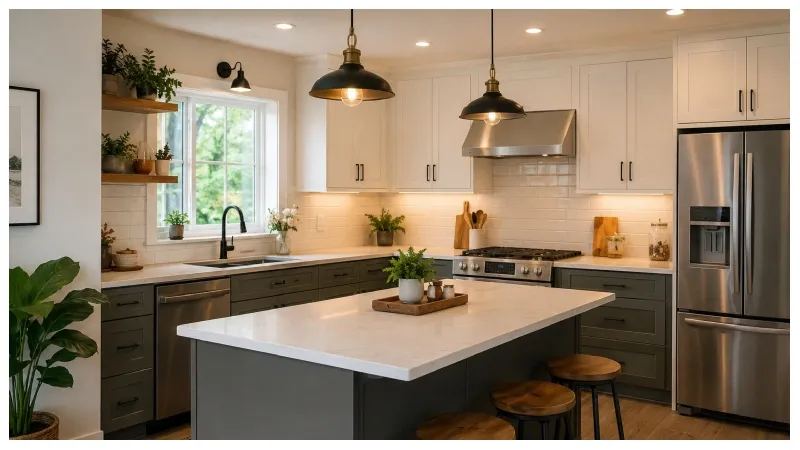
A kitchen does not need a complete renovation to feel new. In many homes, a few smart upgrades can improve storage, lighting, workflow, comfort, and appearance without the cost and disruption of a full remodel. If you are looking for practical Kitchen Upgrading Tips Mintpalment, start by thinking about how you actually use your kitchen. Where do you lose time? Which cupboards are difficult to reach? Is the worktop crowded? Does the room feel dark at night? These everyday frustrations often point directly to the best improvements.
Here are 10 practical kitchen upgrade ideas that can make your space more functional, attractive, and enjoyable.
1. Improve Your Kitchen Storage
Poor storage is one of the most common kitchen frustrations. Even a reasonably sized kitchen can feel cramped when cabinets are difficult to organise.
Instead of adding more cupboards immediately, make better use of the space you already have. Add pull-out shelves to deep cabinets, drawer organisers for cutlery, vertical dividers for baking trays, and tiered racks for spices or cans.
For example, a deep cupboard may look spacious, but items at the back often become forgotten. A pull-out organiser brings everything within easy reach and makes the cabinet far more useful.
When planning Kitchen Upgrading Tips Mintpalment, prioritise storage solutions that make frequently used items easier to access.
2. Upgrade the Lighting
Good lighting can completely change how a kitchen looks and works.
A single ceiling fixture often creates shadows across worktops, especially when someone stands between the light and the counter. Add task lighting beneath wall cabinets or above important preparation areas.
Consider three types of lighting:
- Ambient lighting: Provides general illumination throughout the room.
- Task lighting: Brightens areas where you chop, cook, or prepare food.
- Accent lighting: Creates a warm, inviting atmosphere while drawing attention to key kitchen features.
LED lighting is particularly useful because it offers strong illumination with relatively low energy consumption. Choose a colour temperature that suits the room and your preference rather than focusing only on brightness.
A well-lit worktop is not simply a design feature. It can make food preparation easier and help you see spills, ingredients, and surfaces clearly.
3. Refresh Cabinet Doors and Hardware
Replacing an entire kitchen can be expensive. If your cabinet boxes remain solid and functional, updating the doors, handles, or finish may give the room a completely different appearance.
You could repaint suitable cabinet surfaces, replace dated handles, or install modern knobs and pulls. Keep the overall style consistent with the rest of the room.
For instance, simple hardware can give traditional cabinets a cleaner look, while more decorative handles can add character to a plain kitchen.
Before painting cabinets, check the existing material and use a suitable preparation method and coating. Good surface preparation often makes a bigger difference than the paint itself.
This is one of the most cost-effective Kitchen Upgrading Tips Mintpalment because you can improve the visual appearance without rebuilding the whole kitchen.
4. Improve Your Kitchen Layout for Better Workflow
A beautiful kitchen can still be frustrating if the layout makes cooking unnecessarily difficult.
Pay attention to the relationship between your main cooking areas: the refrigerator, sink, and cooking appliance. You do not need to follow a rigid design rule, but these areas should be reasonably convenient to move between.
Imagine preparing dinner. You might take vegetables from the refrigerator, wash them at the sink, chop them on the worktop, and then transfer them to the cooker. If these steps require constant walking across the room, the layout wastes effort.
When upgrading, focus on your real routine rather than copying a kitchen from a showroom.
5. Add More Useful Worktop Space
Counter space disappears quickly when appliances, containers, and decorative items occupy every available surface.
Start by removing things you rarely use. Store appliances elsewhere if you only use them occasionally. Then consider practical additions such as a kitchen island, movable trolley, fold-down work surface, or countertop extension where space allows.
A movable trolley can be particularly useful in a smaller kitchen. You can use it for food preparation and move it aside when you need more floor space.
The goal is not simply to have a larger worktop. It is to create enough clear preparation space for the way you cook.
6. Upgrade the Sink and Tap
The sink is one of the hardest-working areas in a kitchen, so improving it can have a surprisingly noticeable effect.
If your current sink is shallow, awkwardly positioned, or difficult to clean, consider replacing it with a model that better matches your cooking habits. A deeper basin can make washing large pans easier, while a pull-out or pull-down tap can provide greater flexibility.
Choose materials carefully and check cabinet dimensions before ordering a new sink. Also consider how the tap will interact with the surrounding worktop and backsplash.
A small improvement here can make everyday cleaning and food preparation much more convenient.
7. Make the Backsplash Easier to Maintain
The backsplash sits directly behind some of the messiest parts of the kitchen. Grease, sauce, steam, and food splashes can quickly make poorly chosen surfaces difficult to maintain.
If your existing backsplash looks tired, replacing it can create a strong visual change without altering the entire room.
Tiles remain popular because they come in many styles and are relatively easy to clean when properly installed. Large-format surfaces can reduce the number of grout lines, while glass and other smooth materials can create a cleaner contemporary appearance.
Choose practicality alongside appearance. A surface that looks impressive but requires constant maintenance may become annoying over time.
8. Improve Ventilation
Ventilation is easy to overlook when planning kitchen improvements, but it affects comfort and the condition of the room.
Cooking produces heat, moisture, smoke, and airborne particles. Effective extraction can help remove these from the kitchen instead of allowing them to spread throughout the home.
If you have an existing extractor fan, check whether it actually performs well during normal cooking. Keep filters clean according to the manufacturer’s instructions and make sure the system suits the type of installation.
For Kitchen Upgrading Tips Mintpalment, ventilation may not be the most glamorous suggestion, but it is one of the upgrades you notice most when it is missing.
9. Add Small Convenience Features
Not every improvement needs to be expensive or dramatic.
Small additions can make everyday tasks easier. Think about soft-close drawer mechanisms, charging points, bin organisers, shelf lighting, magnetic storage, utensil dividers, or a dedicated place for frequently used appliances.
One useful approach is to keep a note for a week of everything that annoys you in the kitchen. Perhaps you repeatedly search for scissors, struggle to open a crowded drawer, or move three appliances every time you prepare food.
Those observations give you a practical upgrade list based on real experience rather than guesswork.
10. Choose Durable, Easy-Care Materials
A kitchen experiences constant use, so appearance should never be the only consideration.
When selecting worktops, flooring, cabinet finishes, sinks, and hardware, consider how each material handles moisture, heat, stains, cleaning, and everyday wear.
For example, a surface may look beautiful in a showroom but require more maintenance than you are willing to provide. A slightly less dramatic material that is easy to clean may serve you better for years.
Think about durability as part of the design. The best kitchen is not necessarily the one with the most expensive finishes; it is the one that continues to work well after thousands of meals, spills, clean-ups, and busy mornings.
How to Prioritise Your Kitchen Upgrades
You do not need to complete all ten projects at once. In fact, upgrading gradually can help you spend money where it matters most.
Start with function. Fix storage problems, improve lighting, and address awkward workflow before spending heavily on decorative features.
Next, consider comfort and maintenance. Look at ventilation, worktop space, the sink, and surfaces that are difficult to clean.
Finally, focus on appearance. Cabinet hardware, colours, backsplashes, and decorative details can make the finished kitchen feel cohesive.
A useful rule is to ask three questions before every purchase:
- Will this make the kitchen easier to use?
- Will I still appreciate this upgrade several years from now?
- Does it solve an actual problem in my kitchen?
If the answer is yes to all three, it is probably worth considering.
Final Thoughts
The best kitchen improvements are not always the biggest ones. A better-organised cabinet, brighter worktop, easier-to-clean backsplash, or more convenient tap can have a greater impact on daily life than an expensive cosmetic makeover.
Use these Kitchen Upgrading Tips Mintpalment as a starting point, but adapt them to your room, budget, cooking habits, and household needs. Walk through your normal kitchen routine and identify the moments that cause frustration. Those details will tell you where your money and effort can have the greatest effect.
With thoughtful planning, even a dated or cramped kitchen can become a space that feels easier, cleaner, and more enjoyable to use—without requiring a complete renovation.For more information visit my webesite.