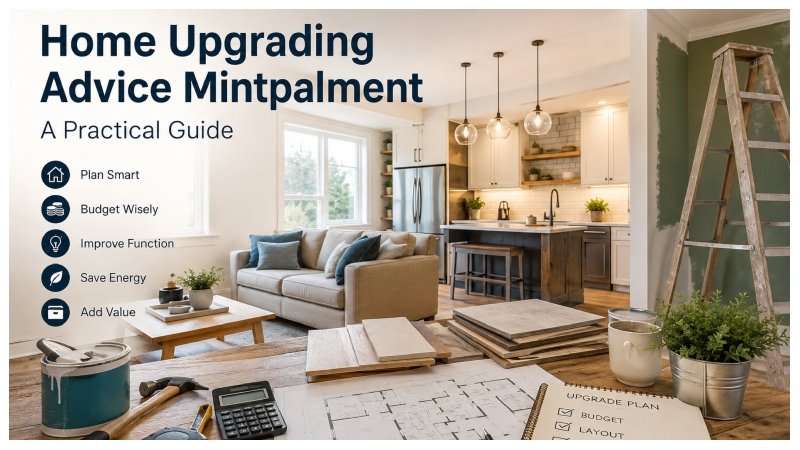
Upgrading a home can feel exciting, but deciding where to start often proves harder than expected. A fresh kitchen, improved lighting, better storage, or a more comfortable living space can all make a difference. The challenge is choosing improvements that match your needs, budget, property, and long-term plans.
This Home Upgrading Advice Mintpalment: A Practical Guide explains how to approach home improvements in a practical way. Instead of focusing only on appearance, it looks at comfort, functionality, maintenance, energy use, and the potential value an upgrade can bring.
Start With a Clear Home Improvement Plan
Before buying materials or contacting contractors, walk through your home and make a list of problems you want to solve.
Look for issues such as:
- Poor lighting
- Limited storage
- Draughty windows or doors
- Outdated fixtures
- Worn flooring
- Inefficient heating or cooling
- Unused areas
- Damp or visible water damage
- Kitchens or bathrooms that no longer work well for your household
Separate the list into essential repairs, useful improvements, and cosmetic changes.
For example, fixing a leaking pipe should take priority over replacing perfectly functional cabinet handles. A practical approach protects your budget and prevents attractive upgrades from hiding more serious problems.
Set a Realistic Renovation Budget
A good renovation budget should include more than the advertised cost of materials and labour. You may also need to account for delivery charges, permits, waste removal, professional fees, and unexpected repairs.
A simple method involves dividing your planned spending into three categories:
Must-have work: Repairs or improvements that address safety, structural, or serious functional problems.
High-value improvements: Changes that noticeably improve comfort, usability, efficiency, or durability.
Optional upgrades: Decorative features that can wait if the budget becomes tight.
It also makes sense to keep a contingency fund for surprises. Older properties, in particular, can reveal hidden issues once walls, floors, or cabinets come out.
The aim is to make smart choices and invest your budget where each upgrade delivers real value. The goal is to spend money where it produces a meaningful improvement.
Improve Function Before Appearance
One of the most useful pieces of Home Upgrading Advice Mintpalment is to solve everyday problems before concentrating on decoration.
Think about how you actually use each room.
A kitchen may look dated, but replacing the entire kitchen might not be necessary. Better storage, improved worktop lighting, updated handles, and a more efficient layout could make the room much easier to use.
Likewise, a home office may benefit more from cable management, task lighting, shelving, and an ergonomic desk than from expensive decorative changes.
Ask yourself:
What frustrates me about this room every day?
The answer often points toward the most worthwhile upgrade.
Prioritise Energy Efficiency
Energy-related improvements can make a home more comfortable while potentially reducing energy consumption.
Start with relatively straightforward measures. Seal obvious draughts, check insulation where appropriate, improve inefficient lighting, and make sure heating controls work properly.
For larger projects, consider whether improvements such as better insulation, high-performance windows, or efficient heating equipment make sense for the property.
However, avoid assuming that every energy upgrade will deliver the same return. Building type, climate, existing insulation, installation quality, and energy prices all affect the outcome.
For example, sealing a noticeable draught may be inexpensive and immediately improve comfort. A much larger project requires more careful planning and a proper assessment of the building.
Give Kitchens and Bathrooms Extra Attention
Kitchens and bathrooms often have a strong influence on how people experience a home because households use them repeatedly every day.
That does not mean you always need a complete renovation.
In a kitchen, practical improvements might include:
- Additional storage
- Better task lighting
- Improved ventilation
- More usable work surfaces
- Updated taps or hardware
- Reorganised cupboards
In a bathroom, ventilation deserves particular attention. Excess moisture can contribute to condensation, mould, and deterioration over time. Fixing ventilation problems can therefore be more important than choosing a new colour scheme.
When planning either room, think about durability as well as style. A fashionable finish may look appealing today, but easy-to-clean and hard-wearing materials can prove more useful over many years.
Don’t Ignore Lighting
Lighting is one of the easiest ways to change the feel and usefulness of a room.
Instead of relying on one central light, consider different layers:
Ambient lighting provides general illumination.
Task lighting helps with activities such as cooking, reading, or working.
Accent lighting highlights architectural details, artwork, shelving, or other features.
For example, a kitchen might use ceiling lighting for general illumination, under-cabinet lights for food preparation, and a pendant over an island or dining area.
Good lighting can make a room feel more comfortable without changing its basic structure.
Create Better Storage
Storage improvements can deliver surprisingly large benefits, especially in smaller homes.
Look for unused vertical space, awkward corners, and areas underneath stairs. Built-in shelving, drawer organisers, wall-mounted storage, and multifunctional furniture can help reduce clutter without increasing the home’s footprint.
A useful test is to observe where clutter naturally collects. If shoes repeatedly pile up near the entrance, the solution may be a proper shoe-storage area. If paperwork accumulates on a dining table, a small filing or organisation system may work better than simply buying more furniture.
Effective storage responds to behaviour rather than forcing people to change it.
Know When to Hire a Professional
Some improvements are suitable for an experienced DIY homeowner, while others require qualified professionals.
Electrical work, major plumbing changes, structural alterations, gas-related work, and certain heating installations can involve safety risks and legal requirements. Local building regulations and professional requirements vary, so check the rules that apply to your property before starting substantial work.
For major projects, obtain more than one written quotation where practical. Ask what the quote includes, what could cause additional charges, how long the work should take, and who handles waste or permits.
Do not automatically choose the cheapest quote. A detailed, realistic quotation can offer better value than a low initial price that later grows through unexpected extras.
Upgrade With Your Future in Mind
A successful home improvement should work not only today but also several years from now.
Consider how your household might change. Perhaps you may need a home office, more storage, an accessible bathroom, or a flexible guest room.
Flexibility can be especially valuable. A room that works as an office today could later become a bedroom, hobby space, or study area.
Home Upgrading Advice Mintpalment approach also helps prevent short-lived trends from dominating your decisions. Neutral, durable foundations can make it easier to update a home’s appearance later without another major renovation.
Common Home-Upgrading Mistakes to Avoid
Even well-planned renovations can go wrong. A few common mistakes deserve attention.
Starting without a budget: Costs can quickly become difficult to control when decisions happen one at a time.
Choosing style over function: Attractive materials do not necessarily create a better-performing room.
Skipping preparation: Poor measurements or inadequate surface preparation can undermine an otherwise expensive project.
Ignoring ventilation and moisture: Cosmetic improvements cannot solve an underlying damp or condensation problem.
Doing everything at once: Tackling too many rooms simultaneously can stretch finances and make the home difficult to live in.
Following trends too closely: A design that looks fashionable now may not suit your preferences later.
Good planning often matters more than expensive materials.
A Simple Way to Prioritise Your Upgrades
If you have several projects competing for attention, score each one according to four factors:
- Urgency – Does it address a repair, safety, or maintenance problem?
- Daily impact – How often will you benefit from the improvement?
- Cost – Can you complete it comfortably within your budget?
- Longevity – Will the improvement remain useful for years?
A leaking roof, for example, would rank highly on urgency. A decorative feature wall might rank much lower.
This simple system can stop renovation decisions from becoming emotional or impulsive.
Final Thoughts
The best Home Upgrading Advice Mintpalment is ultimately about making thoughtful decisions rather than chasing the biggest transformation.
Start by identifying genuine problems, establish a realistic budget, and prioritise repairs and functional improvements. Then consider energy efficiency, lighting, storage, durability, and the future needs of your household.
A successful upgrade does not have to involve a complete renovation. Sometimes the most valuable changes are surprisingly simple: better storage, improved ventilation, more useful lighting, or a room layout that finally works for the people living in it.
When every improvement has a clear purpose, your home can become more comfortable, practical, efficient, and enjoyable without unnecessary spending
For more information visit my webesite.