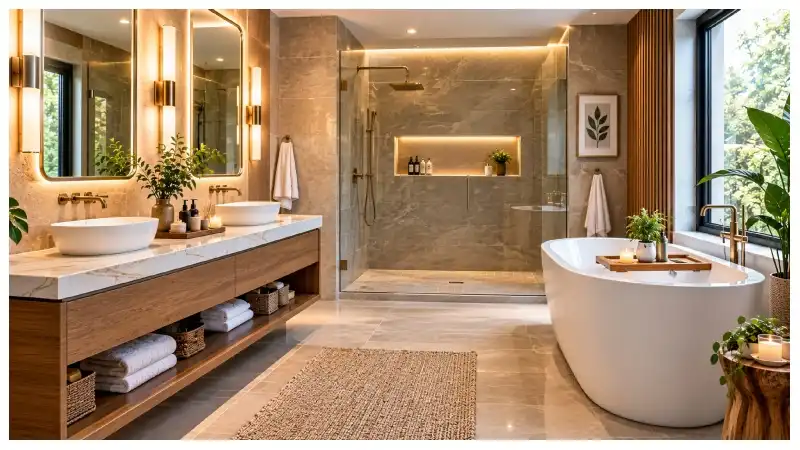
A master bathroom should feel like more than a place to get ready each morning. With the right design, it can become a peaceful retreat where you relax, refresh, and enjoy a little comfort at the end of a busy day. You do not need a huge room or an unlimited budget to create an elegant space. Thoughtful colours, quality materials, smart storage, and well-planned lighting can make a noticeable difference.The best master bathroom ideas combine beauty with everyday function. Whether you are updating an older bathroom or planning a complete renovation, small design choices can help you create a room that feels spacious, welcoming, and timeless.
1. Create a Spa-Inspired Bathroom
A spa-inspired bathroom brings a calm, relaxing atmosphere into your home. Start with a simple colour palette, natural textures, soft lighting, and a few carefully chosen accessories.
Warm white, beige, soft grey, and earthy shades work well for Master Bathroom Ideas look. Add wood-look finishes, natural stone details, soft towels, and neatly organised toiletries to create a calm and inviting bathroom atmosphere.
For example, place a small wooden stool beside the bathtub and keep a rolled towel and bath products on top.Place a humidity-loving plant that thrives in the available light to bring a fresh, natural feel to your bathroom. Master Bathroom Ideas details make the space feel considered without creating clutter.
You can also install a rainfall showerhead if your plumbing and budget allow. Pair it with a comfortable shower enclosure and easy-to-clean surfaces for a more relaxing daily routine.
2.Opt for a Floating Vanity to Enhance Your Bathroom’s Modern Style
A floating vanity creates a clean, streamlined appearance by leaving open space beneath the bathroom cabinet. Master Bathroom Ideas style helps a small bathroom feel more open and less cluttered while creating a seamless look across the floor
Choose a vanity with drawers to store skincare products, hair tools, spare toiletries, and cleaning supplies. Deep drawers with dividers help you organise everyday items without filling the countertop.
Consider finishes that suit the rest of your home. Light oak adds warmth, while matte white creates a fresh appearance. Dark wood can introduce contrast in a bathroom with pale walls and flooring.
Before choosing a floating vanity, check the wall structure and plumbing requirements. A professional installer can confirm whether the wall needs extra support and whether the existing pipework will fit the new design.
3. Install a Walk-In Shower
A walk-in shower is a popular choice in modern bathrooms, offering a sleek, spacious, and open design. Clear glass panels allow light to travel through the room, helping the space feel brighter.
For a modern finish, consider large-format wall tiles, a recessed shelf for shampoo, and matching shower fixtures. A built-in niche keeps products off the floor and reduces the need for extra storage racks.
Pay close attention to the shower floor. It needs the correct slope towards the drain, and the waterproofing system must protect the surrounding structure. Choose slip-resistant flooring that suits wet conditions rather than selecting tiles based on appearance alone.
If you love relaxing in a long bath, you can add a walk-in shower without removing your existing bathtub. Your available floor area, household needs, and plumbing layout should guide that decision.
4. Add a Freestanding Bathtub
A freestanding bathtub can become the focal point of a spacious master bathroom. Its sculptural shape adds visual interest and creates a sense of luxury without requiring elaborate decoration.
An oval tub often suits soft, organic interiors, while a straight-sided design works well in a minimalist setting. Position the bathtub where it has enough clearance for cleaning and comfortable access.
Natural light can make the bathing area feel especially inviting. If a window overlooks a private garden or courtyard, placing the tub nearby may create a beautiful connection with the outdoors.However, check the tub’s weight, filled weight, floor support, water supply, and drainage before purchasing. A freestanding bath needs more than attractive styling to work well in everyday use.
5. Use Elegant Tiles to Add Character
Bathroom tiles influence the room’s entire appearance. They can introduce texture, create contrast, and make a simple layout feel more refined.
Large-format porcelain tiles are a practical option for walls and floors because they offer many finishes, including stone and marble effects. Using fewer grout lines can give your bathroom a cleaner, more seamless look.
For a timeless design, combine neutral wall tiles with a slightly darker floor. If you prefer a bolder look, use patterned tiles behind the vanity or inside the shower as an accent.
Avoid using too many competing patterns in one room. A statement wall usually works best when the remaining surfaces have quieter finishes.
Remember that appearance is only one consideration. Select tiles suitable for their intended location, use appropriate grout, and choose a floor finish that provides enough grip when wet.
6. Improve the Lighting with Layers
Good lighting makes a bathroom more comfortable and helps its design stand out. A single ceiling light often creates harsh shadows around the face and leaves important areas poorly lit.
Instead, combine three types of lighting:
- Ambient lighting: Creates a soft, even glow that illuminates the entire bathroom.
- Task lighting: Helps with shaving, skincare, makeup, and other daily routines.
- Accent lighting: Highlights architectural details, shelves, or decorative features.
Place suitable lights on both sides of the mirror when possible. Master Bathroom Ideas arrangement can reduce facial shadows more effectively than relying on a single light directly above the mirror.
Warm or neutral white light can create a welcoming atmosphere, while a brighter task light helps with detailed grooming. Choose bathroom-rated fixtures and follow local electrical safety requirements, especially near showers and bathtubs.
Dimmable lighting can also help you change the mood from a bright morning routine to a quieter evening soak.
7. Introduce Natural Materials and Warm Colours
Modern bathrooms do not have to feel cold or overly minimal. Natural textures and warm colours can soften clean lines and make the room feel more inviting.
Wood-look cabinetry, stone-effect tiles, brushed metal fixtures, and woven accessories add visual depth. You can combine Master Bathroom Ideas materials without making the room feel busy by keeping the colour palette consistent.
For example, pair a light oak vanity with cream tiles, brushed brass taps, and a pale stone countertop. The different textures create interest, while the shared warm undertones help the design feel balanced.
Real wood requires careful selection and protection in damp environments. Moisture-resistant cabinetry and quality finishes may be more practical in areas exposed to frequent splashes.
8. Make Storage Part of the Design
Clutter can make even an expensive bathroom look untidy. Built-in storage helps keep the room organised while allowing the main design features to stand out.
Consider recessed shelves, mirrored medicine cabinets, vanity drawers, and tall cupboards for towels and spare supplies. If two people share the bathroom, separate drawers or baskets can give each person a dedicated place for everyday essentials.
Keep frequently used products within easy reach and store occasional items elsewhere. A clear countertop makes cleaning easier and gives decorative details more room to shine.
When planning storage, think about the items you actually own. Measure hair tools, bottles, towels, and cleaning products before choosing cabinets. Master Bathroom Ideas simple step helps prevent wasted space and awkward storage arrangements later.
9. Upgrade the Mirrors and Fixtures
Mirrors and bathroom fixtures may seem like small details, but they can change the character of the entire room.
A large mirror can reflect natural light and make a compact bathroom feel more open. A round mirror softens a room with straight lines, while a rectangular mirror suits a clean, architectural design.
For a double vanity, choose a wide mirror or two separate mirrors based on the wall space and lighting arrangement. Make sure each person has enough room to use the sink comfortably.
You can also update taps, shower controls, towel rails, and cabinet handles. Matte black creates strong contrast, brushed brass adds warmth, and polished chrome offers a classic appearance.
For a cohesive result, repeat the same finish across several fixtures rather than mixing too many metal colours. Check product compatibility and maintenance needs before making your final selection.
10. Design a Double Vanity for Shared Comfort
A double vanity can make busy mornings easier when two people share the bathroom. Separate sinks provide individual washing areas, while shared drawers and cabinets offer practical storage.
However, two sinks are not always the best use of space. In a narrow bathroom, a wider single basin with generous counter space may offer more comfort and storage.
Before installing a double vanity, measure the available wall length and allow room for doors, drawers, and nearby walkways. Consider where the plumbing will run, too, because moving water and waste pipes can increase renovation costs.
The goal is to make the bathroom easier to use, not simply to add another sink.
11. Bring Nature into the Bathroom
Natural elements can make a bathroom feel fresh and relaxing. If the room receives enough suitable light, moisture-tolerant plants can add colour and soften hard surfaces.
Choose plants according to the actual conditions in your bathroom. A bright window area differs greatly from a room with no natural light, and high humidity does not guarantee that every plant will thrive.
If living plants are impractical, use natural textures instead. A wooden bath tray, stone accessories, woven storage baskets, or botanical artwork can create a similar sense of warmth.
Keep plants and decorative items away from areas where they obstruct movement, collect standing water, or make surfaces harder to clean.
12. Plan a Luxurious Bathroom on a Budget
A stylish bathroom does not require replacing every fixture. Prioritising the right improvements can give the room a fresh appearance while keeping spending under control.
Start by identifying what looks dated or causes daily frustration. Worn cabinet handles, poor lighting, limited storage, and tired sealant may deserve attention before you replace a bathtub or move plumbing.
Consider these budget-friendly upgrades:
- Replace outdated mirror and cabinet hardware.
- Install brighter, suitable lighting.
- Refresh the walls with bathroom-appropriate paint.
- Add organised drawer inserts and attractive towel storage.
- Replace worn shower fittings where compatible.
- Update selected surfaces instead of removing every tile.
Set aside money for unexpected repairs, especially in older bathrooms. If a contractor discovers water damage, poor waterproofing, or plumbing problems, addressing these issues should take priority over decorative upgrades.
A well-planned renovation balances the visible improvements with the less noticeable work that keeps the room safe and durable.
How to Choose the Right Master Bathroom Design
Before committing to a style, consider the size of your bathroom, your daily routine, and the amount you want to spend. A large bathroom may accommodate a freestanding tub and separate shower, while a smaller room may benefit more from a floating vanity, a clear-glass shower enclosure, and recessed storage.
Create a simple plan that shows the location of the doors, windows, plumbing fixtures, and storage. Measure the room carefully and check clearances before ordering large items.
Think about cleaning and long-term maintenance, too. Textured surfaces can add character but may need more effort to clean. Open shelving looks attractive when organised, while closed cabinets hide everyday clutter.
If you are planning major plumbing, electrical, or structural changes, consult qualified professionals and check local building requirements. Careful planning can help prevent expensive changes once work begins.
Final Thoughts
The most successful modern bathroom designs combine comfort, function, and a clear sense of style. From floating vanities and walk-in showers to layered lighting, natural finishes, and clever storage, each feature should improve how the room looks and works.
Choose the upgrades that suit your space, budget, and routine rather than copying every trend. With a thoughtful layout and durable materials, you can create a master bathroom that feels elegant today and remains practical for years to come.Get mor information from my website.