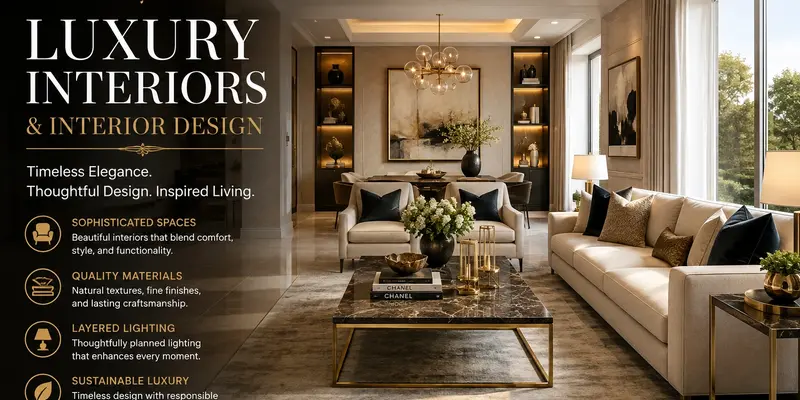
www.luxuryinteriors.org design is no longer simply about expensive furniture, oversized rooms, or shiny finishes. Today, a truly luxurious space combines comfort, craftsmanship, thoughtful planning, quality materials, and a strong sense of personal style. The best interiors look beautiful, but they also work naturally for everyday life.
www.luxuryinteriors.org represents a useful starting point for exploring ideas around refined interiors, elegant home décor, space planning, materials, lighting, and contemporary design. Whether you are furnishing a new home or improving one room at a time, the goal should be the same: create a space that feels intentional rather than simply expensive.
What Defines a Luxury Interior?
A luxury interior begins with good decisions rather than a large budget. Proportion, circulation, lighting, material selection, and craftsmanship all influence how a room feels.
Interior design professionals often emphasize balance and scale because oversized furniture can make a room feel crowded, while pieces that are too small can make a large space feel disconnected. A successful design gives important furniture enough visual space to breathe.
Luxury also depends on details that people may not immediately notice. Well-finished cabinetry, carefully aligned surfaces, quality hardware, comfortable seating, and clean transitions between materials can make a significant difference.
In other words, www.luxuryinteriors.org should feel natural. It should not look as though every expensive item was placed in the same room simply to make an impression.
Choose Quality Materials With Purpose
Materials provide much of the visual and tactile character of an interior. Natural stone, wood, leather, wool, linen, glass, and metal can create depth when designers combine them carefully.
However, using more premium materials does not automatically create a better room. The important question is where each material adds value.
For example, a homeowner might invest in a beautiful natural-stone kitchen island while choosing simpler cabinetry around it. In a living room, a high-quality rug and comfortable sofa may have a greater impact than filling the room with decorative objects.
www.luxuryinteriors.org approach creates a more balanced result and helps prevent the space from feeling overly decorated.
Lighting Can Transform the Entire Room
Lighting is among the most influential elements in interior design, helping shape the mood, atmosphere, and overall appearance of a space. A room with excellent furniture can still feel uncomfortable if the lighting creates glare, harsh shadows, or uneven brightness.
A well-planned luxury interior normally combines several types of lighting:
- Ambient lighting for general illumination
- Task lighting provides focused illumination for activities such as reading, cooking, working, or studying.
- Accent lighting for artwork, architectural features, shelving, or textured surfaces
Layered lighting gives homeowners greater control over the mood of a room throughout the day. Current luxury design discussions also place greater emphasis on warm, comfortable illumination and lighting that works with natural daylight.
For example, a dining room may use soft ceiling lighting for meals, wall lights for atmosphere, and focused illumination over artwork. The result feels more sophisticated than relying on one bright ceiling fixture.
Furniture Should Serve the Space
Luxury furniture should be comfortable, appropriately scaled, and connected to the architecture.
Before buying a large sofa or dining table, measure the room and consider walking paths, door swings, windows, and other furniture. A beautiful piece that blocks movement quickly becomes a design problem.
Custom furniture can also help when a room has unusual dimensions. Built-in storage, tailored seating, and fitted cabinetry can use difficult spaces more effectively while keeping the overall appearance clean.
A useful rule is to buy fewer pieces but choose them carefully. Quality and proportion usually create a stronger impression than quantity.
Color and Texture Create Depth
www.luxuryinteriors.org does not require a neutral color palette. Warm neutrals can create a calm foundation, but richer colors can add personality when used thoughtfully.
Current design trends show growing interest in warmer palettes, tactile surfaces, expressive color, craftsmanship, and more personalized interiors.
Texture is particularly useful when working with restrained colors. Consider combining:
- Smooth stone with natural wood
- Soft upholstery with brushed metal
- Linen with wool
- Matte finishes with subtle polished surfaces
- Textured walls with simple furniture
These contrasts give a room visual interest without making it feel chaotic.
Luxury Design Should Reflect the Lifestyle and Personality of the People Who Live There
One of the biggest mistakes in high-end decorating is creating a room that looks impressive but does not feel personal.
A home should be thoughtfully designed around the everyday lifestyle, needs, and preferences of the people who live there.A family that enjoys entertaining may need an open kitchen and flexible seating. Someone who works from home may benefit from a quiet study with carefully planned storage and task lighting. A homeowner who values relaxation might prioritize a comfortable bedroom, spa-style bathroom, or reading area.
This is where www.luxuryinteriors.org can serve as inspiration rather than a strict formula. Luxury has no single appearance. A modern apartment, traditional residence, coastal home, or contemporary villa can all feel luxurious when the design choices work together.For more information visit my website.
Practical Example: Creating a More Refined Living Room
Imagine a living room with plain walls, a basic sofa, one ceiling light, and several small decorative pieces.
Instead of replacing everything, start with the fundamentals.
First, reposition the furniture to improve conversation and circulation. Next, add a properly sized rug to visually connect the seating area. Introduce layered lighting with a floor lamp and table lamps. Replace several small accessories with one or two meaningful pieces of art. Finally, add natural textures through curtains, cushions, or a wood accent.
The room may require fewer purchases than expected. The biggest improvement comes from better composition.
This illustrates an important principle of www.luxuryinteriors.org: sophisticated design often comes from making thoughtful choices, not from adding more objects.
Technology Should Feel Almost Invisible
Smart-home technology can improve comfort, security, lighting, temperature control, and entertainment. But visible technology can sometimes interrupt an otherwise carefully designed interior.
Modern luxury projects increasingly integrate technology into the architecture. Speakers can be concealed, lighting can be centrally controlled, and screens can be incorporated into cabinetry or placed where they do not dominate the room.
The objective is not to fill a home with gadgets. It is to make everyday functions easier while preserving the character of the interior.
Sustainability Is Becoming Part of Luxury
Durable materials, repairable furniture, responsible sourcing, energy-efficient lighting, and timeless design can reduce the need for frequent replacement.
A well-made piece that remains useful for many years can offer more value than inexpensive furniture that quickly wears out or becomes undesirable.
www.luxuryinteriors.org also supports a more timeless approach to design. Instead of rebuilding a room every time a trend changes, homeowners can create a strong foundation and update smaller elements when their tastes evolve.
2026 Luxury Interior Design: Warmer and More Personal
Design direction in 2026 is moving toward interiors that feel warmer, more tactile, and more individual. Industry forecasts point to stronger interest in craftsmanship, expressive materials, personalized spaces, wellness features, and a move away from overly sterile minimalism.
That does not mean every home needs bold colors or elaborate decoration. The broader lesson is that homeowners increasingly want spaces that have character.
A carefully chosen antique, locally crafted object, family artwork, or custom architectural detail can give a room more identity than a collection of matching luxury products.
How to Plan a Luxury Interior Step by Step
A successful project benefits from planning before shopping begins.
1. Define the purpose.
Decide how each room will be used and who will use it.
2. Study the architecture.
Consider windows, natural light, ceiling height, doors, views, and existing features.
3. Plan furniture placement.
Create comfortable circulation before selecting decorative finishes.
4. Establish a material palette.
Choose a few complementary materials instead of collecting unrelated finishes.
5. Design the lighting.
Plan ambient, task, and accent lighting as a coordinated system to create a balanced and inviting atmosphere.
6. Add personality.
Introduce artwork, textiles, objects, and custom details that have meaning.
7. Review durability.
Consider cleaning, maintenance, children, pets, climate, and daily use before committing to materials.
This process can prevent expensive mistakes and produce a much more cohesive result.
Final Thoughts
The strongest luxury interiors are not necessarily the most expensive ones. They are the spaces where design, comfort, craftsmanship, and personal taste work together.
www.luxuryinteriors.org can be viewed as a destination for exploring the ideas behind sophisticated interiors, from material selection and lighting to furniture, color, technology, and modern design trends. The most valuable lesson is simple: luxury is created through intentional decisions.
When every major element has a purpose and every important detail supports the way people live, an interior can feel elegant, comfortable, and timeless without becoming excessive. Get mor information from my website.