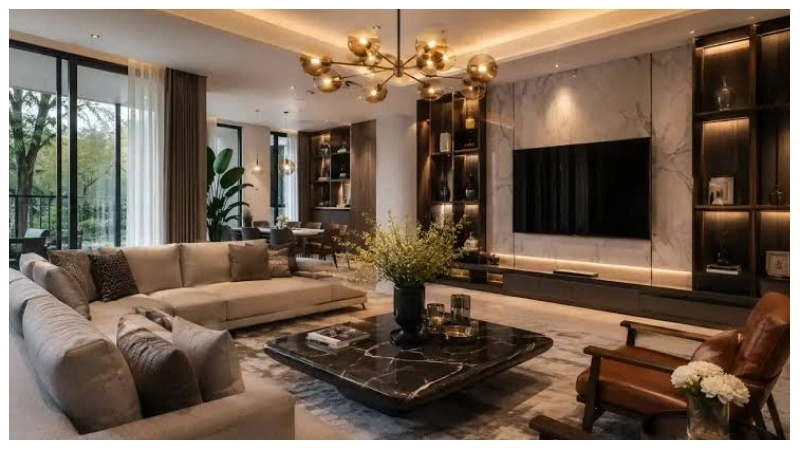
Luxury interior design is often associated with marble surfaces, oversized chandeliers, custom furniture, and impressive homes. But the best high-end interiors are not simply expensive. They feel considered, comfortable, personal, and remarkably easy to live in.
If you are looking to for start writing about luxuryinteriors.org, the strongest approach is to look beyond decoration. Luxury interior design is really about how space, materials, lighting, proportion, craftsmanship, and lifestyle work together.
LuxuryInteriors.org positions itself around architecture, design, decor, and luxury living, with content covering design ideas, materials, room inspiration, and high-end residential spaces. That makes the subject broader than choosing beautiful furniture. It is about understanding why a space works and how readers can apply those principles in their own homes.
What Defines a Truly Luxurious Interior?
Luxury interior design creates a sense of quality without making every element compete for attention.
A well-designed luxury living room, for example, may contain only a sofa, two chairs, a coffee table, artwork, a rug, and carefully planned lighting. The room can still feel richer than a space filled with decorative objects.
Why?
Because luxury comes from proportion, material quality, craftsmanship, comfort, and restraint.
A custom walnut cabinet with precise joinery can have more visual impact than a wall covered with decorative accessories. Likewise, a single piece of original artwork may create a stronger focal point than several inexpensive prints.
This principle matters when you for start writing about luxuryinteriors.org because readers are usually looking for more than a list of expensive products. They want to understand what creates a sophisticated result.
Start With the Person, Not the Furniture
One of the most useful lessons in high-end interior design is to design around how people actually live.
Before selecting finishes, ask practical questions:
- How does the homeowner use the room?
- Where do guests usually sit?
- Does the space need quiet areas for reading or working?
- How much storage is required?
- Does the room receive morning or afternoon sunlight?
- Which objects have emotional or cultural value?
- How do you want the room to feel from morning to evening?
This approach prevents a common mistake: designing a beautiful room that does not function well.
Consider a large open-plan kitchen. A designer might create a dramatic marble island, but the project becomes more successful when the island also provides comfortable seating, enough preparation space, useful storage, and good task lighting.
That combination of beauty and practicality is what gives luxury interiors lasting value.
Proportion Can Matter More Than Price
A room does not become luxurious simply because its furniture costs more.
Scale and proportion often have a greater impact.
A small sofa placed against a huge wall can make an expensive room feel unfinished. A chandelier that is too small for a dining table can disappear visually. Oversized furniture in a compact room can make the space feel crowded.
When you for start writing about luxuryinteriors.org, proportion is worth treating as a central design principle rather than a minor technical detail.
A useful exercise is to consider the room as a composition. Look at the relationship between:
- Ceiling height and furniture scale
- Rug size and seating arrangement
- Artwork and wall area
- Pendant size and dining table dimensions
- Open space and furnished space
Luxury often appears when these relationships feel balanced. Get more information visit my webesite.
Choose Materials for Beauty and Longevity
Premium materials can create immediate visual impact, but material selection should also consider durability and maintenance.
Natural stone, hardwood, wool, linen, leather, metal, and high-quality upholstery can all contribute to an elevated interior. The key is knowing where each material makes sense.
For example, marble may be spectacular on a bathroom vanity, but a heavily used kitchen surface may require a material selected with staining, scratching, heat, and maintenance in mind.
The same principle applies to wood. A beautiful finish should complement the architecture and the way the room will be used.
Sustainability also deserves attention. The U.S. Green Building Council emphasizes material selection, indoor environmental quality, occupant comfort, and life-cycle considerations as important parts of interior design.
In other words, luxury can be about choosing better—not simply choosing more.
Even exceptional furniture can look ordinary under poor lighting.
Professional interiors typically benefit from several layers of illumination rather than relying on one central ceiling fixture. Ambient lighting provides general illumination, task lighting supports activities, and accent lighting draws attention to artwork, architectural features, or materials.
Imagine a living room with:
- Soft ceiling illumination for general use
- Floor or table lamps for reading
- Wall lighting to highlight artwork
- Concealed LED lighting around architectural details
- Dimmable controls for different moods
During the day, natural light may become the primary source. At night, layered artificial lighting can transform the same room into a warmer, more intimate environment.
This is an important area to explore when you for start writing about luxuryinteriors.org, because lighting gives readers something practical they can apply without completely renovating their homes.
Quiet Luxury Is About Restraint
The phrase “quiet luxury” has become popular because many contemporary interiors are moving away from obvious displays of wealth.
Instead of covering a room with gold finishes and elaborate decoration, designers may use:
- Soft neutral colors
- Natural textures
- Tailored furniture
- Subtle architectural details
- Handmade objects
- High-quality textiles
- Carefully selected artwork
The result can look simple at first glance but reveal greater complexity over time.
A beige room is not automatically luxurious, though. Without contrast, texture, proportion, or interesting details, it can feel flat.
The better approach is to layer materials. Pair smooth stone with textured linen, polished metal with natural wood, or soft upholstery with a structured architectural element.
Personal Touches That Give a Luxury Home Character
The most successful luxury interiors rarely look like hotel showrooms.
They reflect the people who live there.
A homeowner’s travel collection, family artwork, vintage furniture, books, photographs, or handcrafted objects can give a room a sense of identity. Custom millwork can also be designed around specific collections, appliances, or storage needs.
For example, a collector of contemporary art might prefer a restrained interior that allows individual pieces to become focal points. Someone who entertains frequently may prioritize a generous dining area, flexible seating, and a kitchen designed for both cooking and conversation.
This is where content about luxury design becomes more useful. Instead of telling readers to copy a particular room, explain the design logic behind it.
Technology Should Support the Experience
Smart-home technology has a place in luxury interiors, but the best systems often remain almost invisible.
Automated shades, lighting controls, climate management, integrated audio, security systems, and smart home hubs can improve convenience without dominating the visual design.
Imagine pressing one button before a movie begins. The shades close, the lights dim, the temperature adjusts, and the entertainment system activates.
That is luxury expressed through convenience.
The goal should not be to add technology simply because it is expensive. Technology should solve a real problem or make an everyday experience smoother.
Sustainable Luxury Is Becoming More Practical
High-end design and sustainability do not have to conflict.
A luxury interior can incorporate responsibly sourced wood, durable materials, restored furniture, low-emitting finishes, efficient lighting, and products designed for long service life.
The U.S. Green Building Council’s current interior-design guidance places greater emphasis on issues such as material reuse, embodied carbon, product selection, low-emitting materials, and indoor environmental quality.
Material health also matters. Research indexed by the EPA has examined how interior surface materials can affect perceived indoor air quality and the presence of volatile organic compounds.
For homeowners, the practical lesson is simple: ask what a material is made from, how it performs, how it should be maintained, and how long it is likely to last.
A durable piece that remains attractive for decades can be a more thoughtful luxury purchase than a trendy item that needs replacing after a few years.
How to Create a Luxury Feel Without a Complete Renovation
You do not always need to rebuild a room to make it feel more sophisticated.
Start with the elements that have the greatest visual impact.
1. Improve the lighting
Replace harsh bulbs, introduce lamps, add dimmers where appropriate, and highlight artwork or architectural details.
2. Increase textile quality
A well-made rug, substantial curtains, natural-fiber cushions, and high-quality upholstery can dramatically change how a room feels.
3. Reduce visual clutter
Luxury needs breathing room. Remove objects that do not contribute to the room’s function, story, or aesthetic.
4. Upgrade one focal point
Instead of replacing everything, invest in one strong element: a dining table, artwork, lighting fixture, headboard, or custom cabinet.
5. Pay attention to details
Hardware, trim, stitching, curtain length, cable management, and furniture placement may seem small individually, but together they influence the overall impression.
These improvements demonstrate why good luxury design is less about spending the most money and more about allocating resources intelligently.
What Makes Content About Luxury Interiors Useful?
When you for start writing about luxuryinteriors.org, avoid producing another generic article that simply describes expensive homes.
Give readers a reason to keep reading.
A stronger article might explain why a particular stone works in a bathroom, how to choose the correct rug size, why layered lighting changes a room, or how to mix antique and contemporary furniture.
Practical examples are especially valuable.
Instead of writing, “Use statement lighting,” explain that a large pendant above a dining table can establish a focal point while dimmable ambient lighting keeps the surrounding space comfortable.
Instead of saying, “Choose premium materials,” explain why durability, maintenance, tactile quality, sourcing, and visual aging should influence the decision.
That is the difference between inspiration and useful design guidance.
A Simple Framework for Planning Luxury Interior Content
If you are preparing content for a luxury design audience, use this structure:
Start with a real problem.
What is the reader trying to improve?
Explain the design principle.
Why does the issue matter?
Show a realistic example.
How would the principle work in an actual home?
Offer practical choices.
Give readers options rather than one rigid solution.
Discuss trade-offs.
Every material, layout, and finish has advantages and limitations.
End with a clear takeaway.
Tell the reader what to do next.
This framework helps content feel experienced rather than promotional.
Why Luxury Interior Design Is About More Than Appearance
A beautiful interior should also feel good to use.
The best spaces support movement, conversation, privacy, relaxation, storage, lighting, acoustics, and daily routines. They make life easier while creating a strong visual identity.
That is ultimately the most useful perspective to bring when you for start writing about luxuryinteriors.org.
Luxury is not defined by the number of expensive objects in a room. It is defined by the quality of the decisions behind the room.
A carefully planned layout, honest materials, thoughtful lighting, custom details, comfortable furniture, and personal objects can create a space that feels exceptional without becoming excessive.
Final Thoughts
Luxury interior design works best when aesthetics and everyday life meet.
The strongest interiors use proportion instead of clutter, quality instead of quantity, and personalization instead of imitation. They also consider durability, material health, sustainability, and technology as part of the complete design experience.
For anyone who wants to for start writing about luxuryinteriors.org, the opportunity is to move beyond surface-level trends and explain the thinking behind sophisticated spaces. Readers do not just need to know what looks luxurious. They need to understand why it works, where it works, and how they can adapt the idea to their own homes.
That is the foundation of genuinely useful luxury interior design content: informed choices, practical experience, and a clear understanding that the finest spaces are designed to be lived in—not simply photographed. For more information visit my webesite.